
Driving Towards Justice: A Day in the Life of LWOB in Zambia
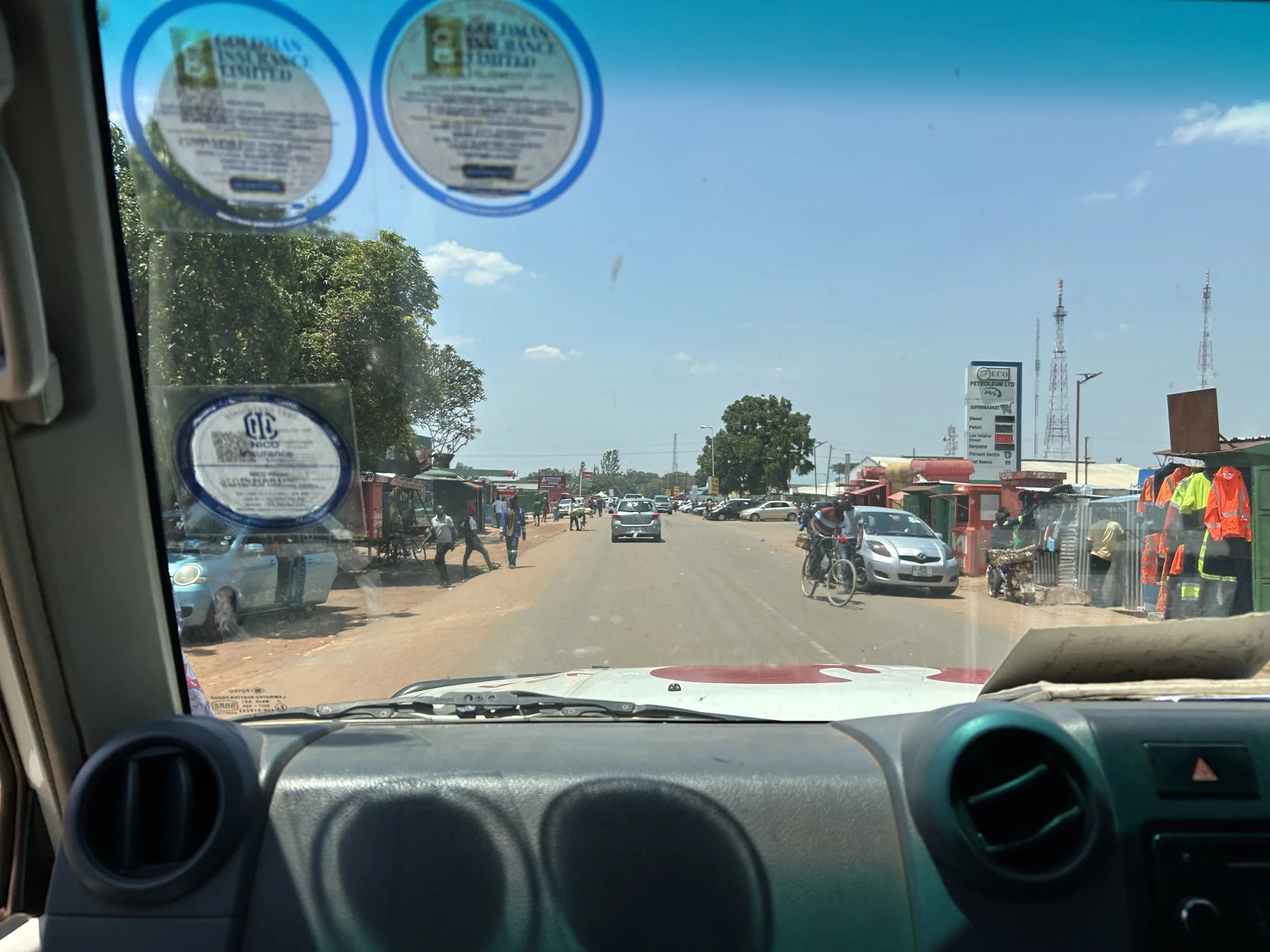
Photo: The view from the Land Cruiser while driving through central Kasama
The drive from Lusaka, the capital of Zambia, to Kasama takes 12 hours on a good day.
If you leave Lusaka at 4am, you’d be lucky to arrive in Kasama by 4pm; arriving by 5pm or 6pm is more common. Kasama is the capital of Northern Province; it is the administrative, economic, and cultural hub for all of Northern Zambia. It is the only city for a long way in any direction. It is also a rapidly growing city whose population has more than doubled to 158,000 in the past 20 years. However, outside of town, this is a rural part of the world. There are only a handful of paved roads; most extend from Kasama like spurs from a spoke. Cars are infrequent, and picking up hitch hikers is common. Traveling here takes time, and a whole lot of patience.
Which is why the addition of a Land Cruiser to the Kasama One Stop Center (OSC) has been nothing short of transformatory. The vehicle is seconded by local NGO Bakashana Basambilile, who are working with LWOB as part of its Zambia: Bridges to Justice project. Bridges to Justice is LWOB’s model for responding to community identified justice needs where traditional funding falls short. This project in Zambia, funded by the Jones Day Foundation, strengthens the National Prosecution Authority’s ability to prosecute cases of Sexual and Gender Based Violence (SGBV) while also supporting Bakashana and another Zambian NGO to make justice more accessible in traditionally hard to reach areas. Today, I am shadowing the staff of the OSC as they drive around Kasama district supporting survivors of SGBV.
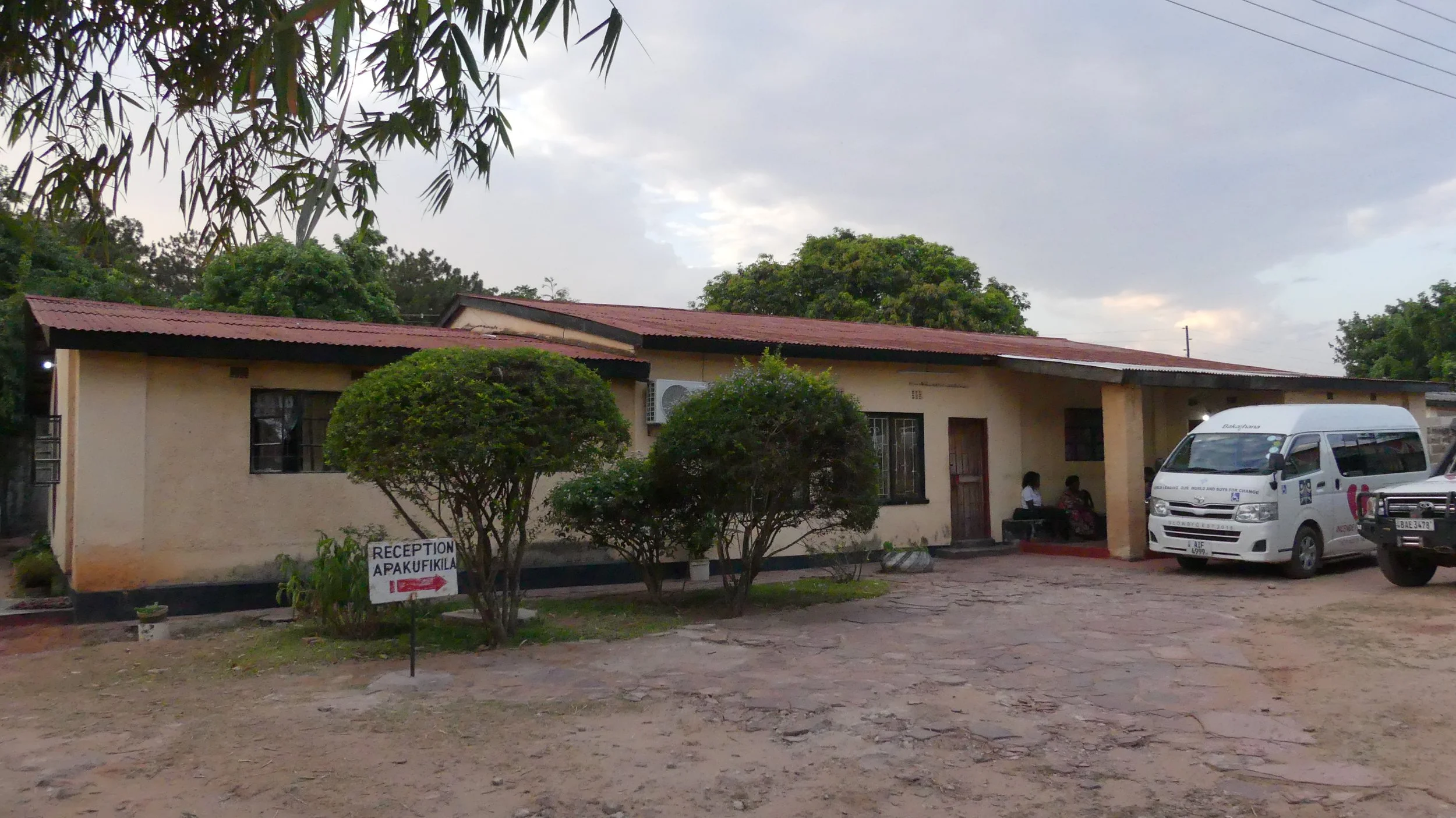
Photo: The Bakashana office in Kasama
The day starts early, around 8am. The team has just received word of a rape case in neighboring Mungwi district. I join Mercy, an OSC social worker and Allan, the driver of the Land Cruiser, and we depart Kasama. As we drive out of town, we pass new warehouse construction tucked between mud-brick buildings with thatch and tin roofs inhabited by all manner of vendors, barbers, beauty suppliers, and bars.
After half an hour, we arrive in Mungwi. We drive off the tarmac and onto a dirt road at the edge of town. We enter a neighborhood of partially constructed homes and empty plots. As Kasama mushrooms in population, many middle class Zambians are buying plots and building houses in Mungwi, away from the noise in town. Consequently, Mungwi is rapidly growing, too — except, the people haven’t fully arrived yet. This neighborhood more resembles a ghost town than a boom town.
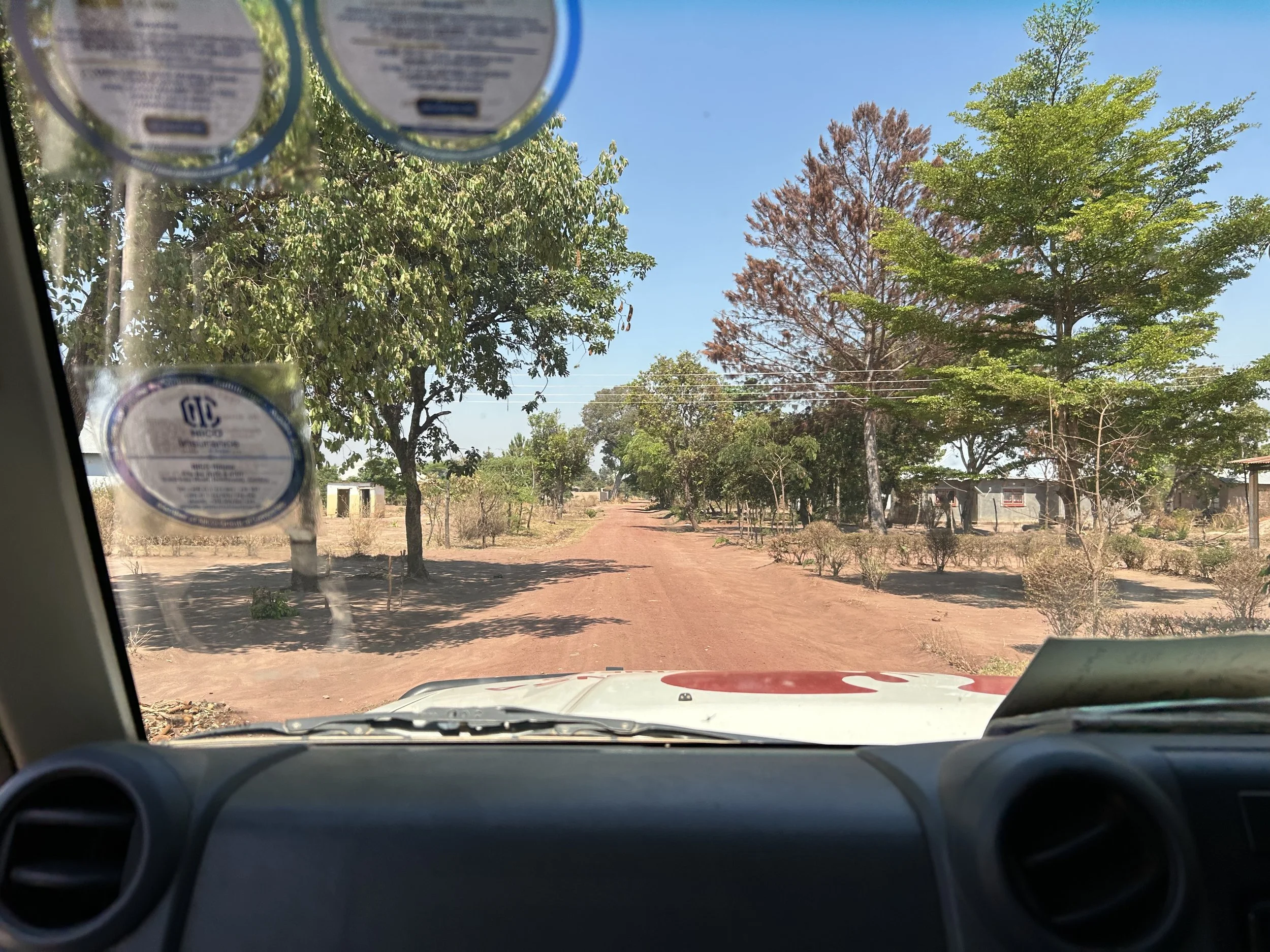
Photo: Driving through Mungwi
We are having trouble finding the survivor. We visit her house, but no one is home. Her neighbors claim that she’s gone to the police station, but when we call, they say they haven’t seen her. We try other houses in the area, but no luck. We change gears and sit down with the neighbors to get a handle on the situation. The group begins chatting in rapid Bemba. Allan quietly translates:
They say the man broke into the lady’s house late at night and raped her. The neighbors heard him shouting outside before he went in. But it’s unclear whether they knew each other already — they may have been romantically involved before the incident last night. Now the neighbors think that he’s gone to the police first so they wouldn’t come to investigate. He probably told them that they were lovers and it was just a domestic affair.
Allan and I shake our heads. Misogynistic gender norms and familial values often govern how instances of SGBV are handled. I ask Mercy if we could do community outreach and Know Your Rights sessions in Mungwi; she tells me Bakashana has already been doing it. We agree to expand them officially as part of the program. The team decides to return again tomorrow.
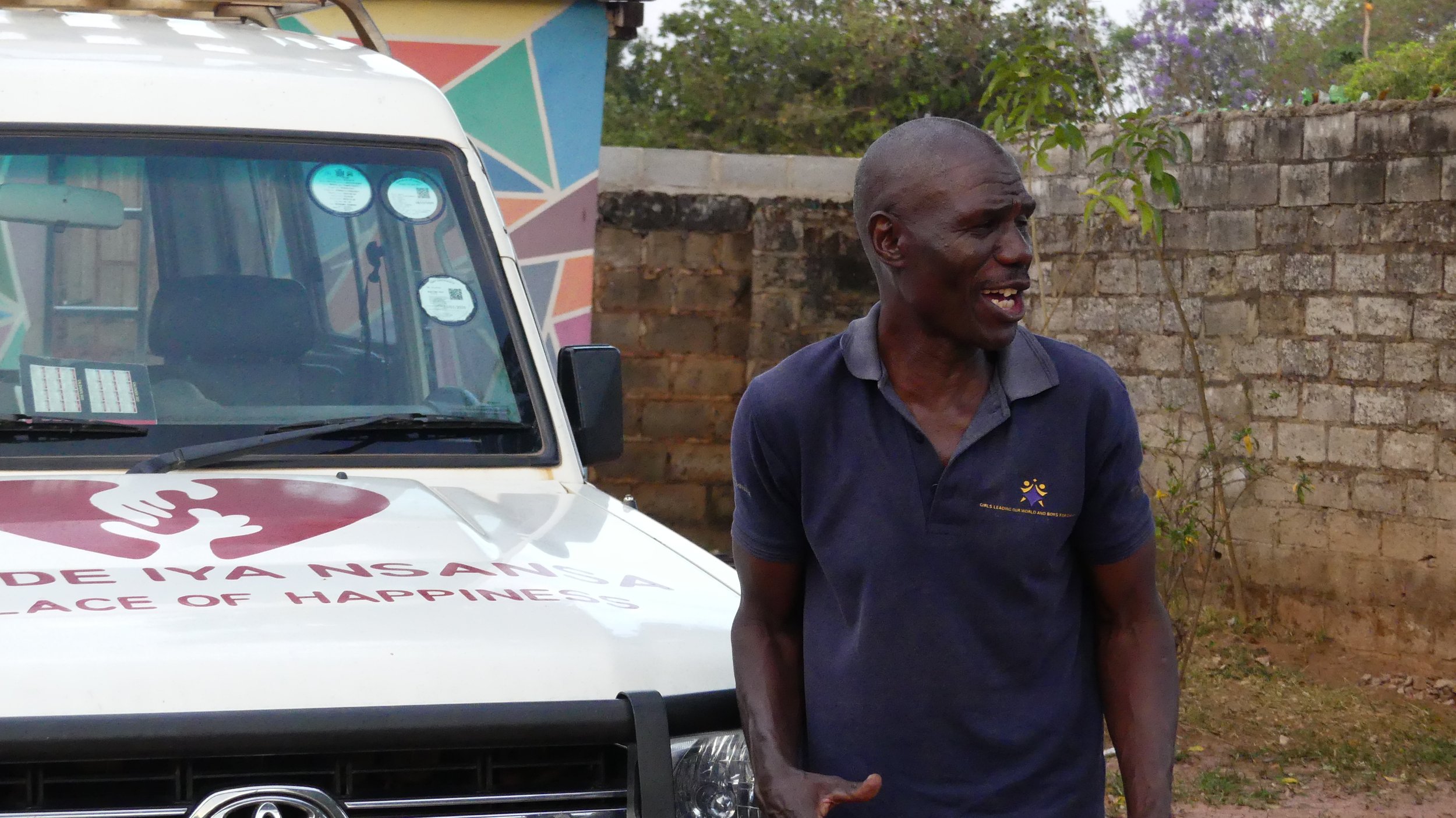
Photo: One Stop Center driver Allan
As we drive back to town, we pass a handful of young men walking down a dirt road. It leads off beyond eyesight into the woods. Allan explains that there is an informal small scale mine just down this road. Zambia has long been a mining country and the government recently pledged to increase mining over the next decade. Allan tells me that here, a prospecting company found gold but determined there wasn’t enough to start a formal mine. The prospectors left, but they left the knowledge of the underground riches behind.
As a result, an informal community appeared virtually overnight. Allan tells me it’s mostly young men who do the digging, with young women providing domestic labor like cooking and laundry. The average age in these communities is low — just a bit older than teenagers. Few people are over the age of 30. These informal settlements operate a bit like boomtowns: there’s no local governance structure, nor planning, nor police. Alcohol and drug use are common. While this community likely has a high prevalence of SGBV, Allan explains that very few of these cases make their way to the OSC due to the resources required to travel to Kasama, limited formal justice systems, and fear of the authorities. We resolve to explore ways to do outreach there, too.
Our conversation is interrupted by another urgent call: a 12-year-old student in a Kasama school is pregnant and the head teacher suspects another teacher might be involved. We rush back into town and pick up Nicolas, the paralegal from the OSC. We zoom across town and fly down the hill towards the market. As we approach, Allan suddenly pulls the Land Cruiser off onto the shoulder. I ask why we’ve stopped. Allan rolls down his window and greets someone he knows — an old friend. Local custom mandates that we stop, even while in great haste, to share a greeting.
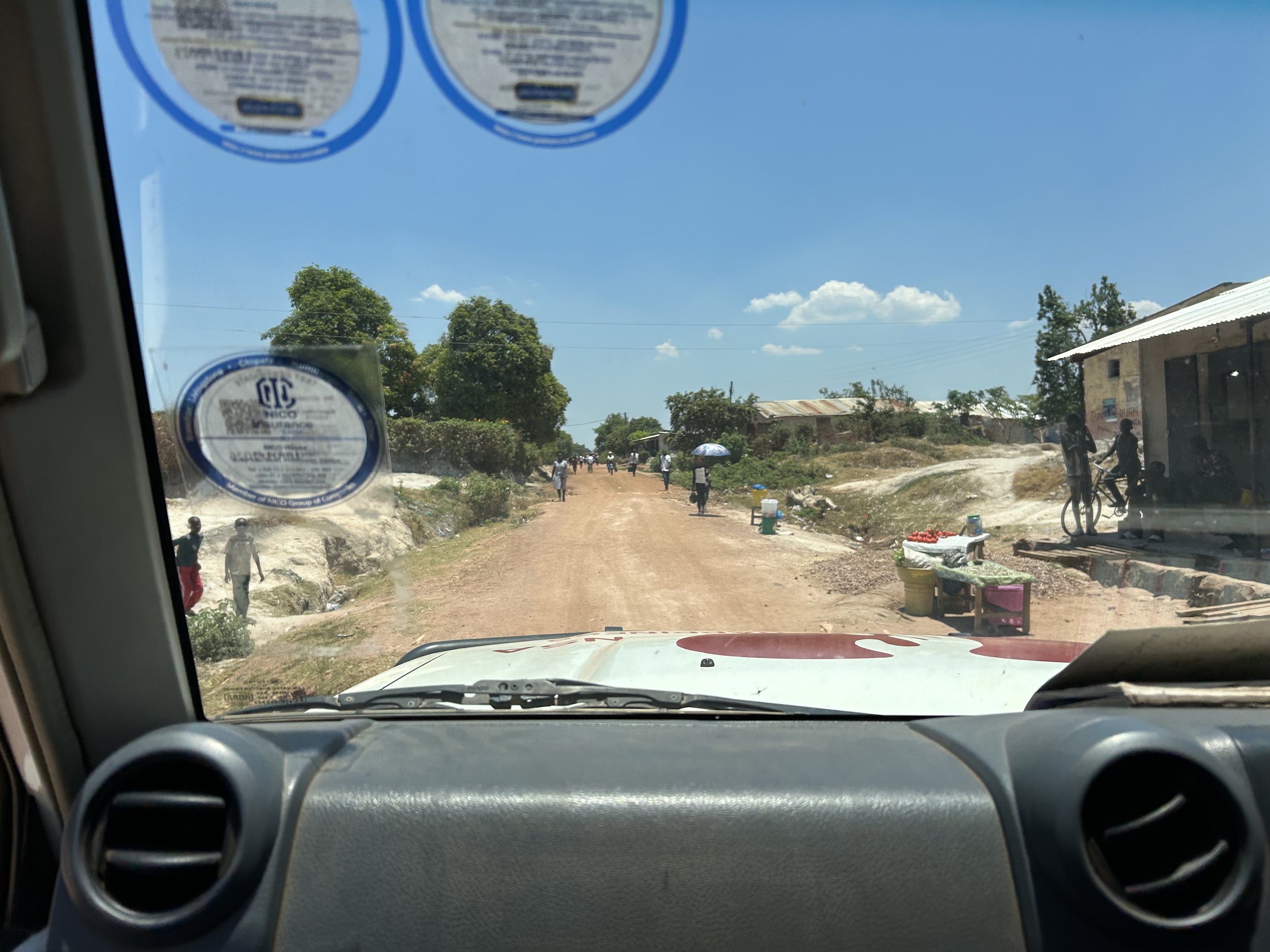
Photo: Driving through the outskirts of Kasama
We drive down towards the city market. We turn off the tarmac and onto a dirt road. It’s a bumpy ride — rain erosion has created a gully down the center of the road. We lurch side to side as we go forward. We’re driving away from the city center — out of town — and yet, the exurbs seem to be endless. The city has grown outwards, and the town is surrounded by a ring of informally developed and densely populated townships. These communities generally develop without centralized planning, which means the people who live here are farther from the regular town resources, such as the local police or clinic. Three miles down the road we realize we’ve gone the wrong way. We turn around and drive back to the market. We stop to greet another friend of Allan (who conveniently helps us with directions).
We reach the school, a half finished two-room schoolhouse that is being built by the community at the edge of town. In the distance, I see fields of fallow maize, dry and awaiting the rains that will start in another month. We are greeted by the head teacher, who ushers us in. Mercy meets the girl and her mother and conducts a short intake session. She quickly decides to bring her to the OSC. Everyone climbs back into the land cruiser, and we start back towards town, after, of course, stopping to greet yet another friend of Allan’s.
As we reach the OSC, we receive another urgent call. Another school-aged child has been raped in an outer village. The police already apprehended a suspect, and the survivor is still in the village. We pick up Cecilia, a social worker and manager at Bakashana, and head west out of town. We’ve been told to meet the girl at the village clinic, but when we arrive, no one is there. There’s no cell service at the clinic, so we drive a couple of miles uphill. We connect to the cell network, but we still can’t reach our contact or the survivor.
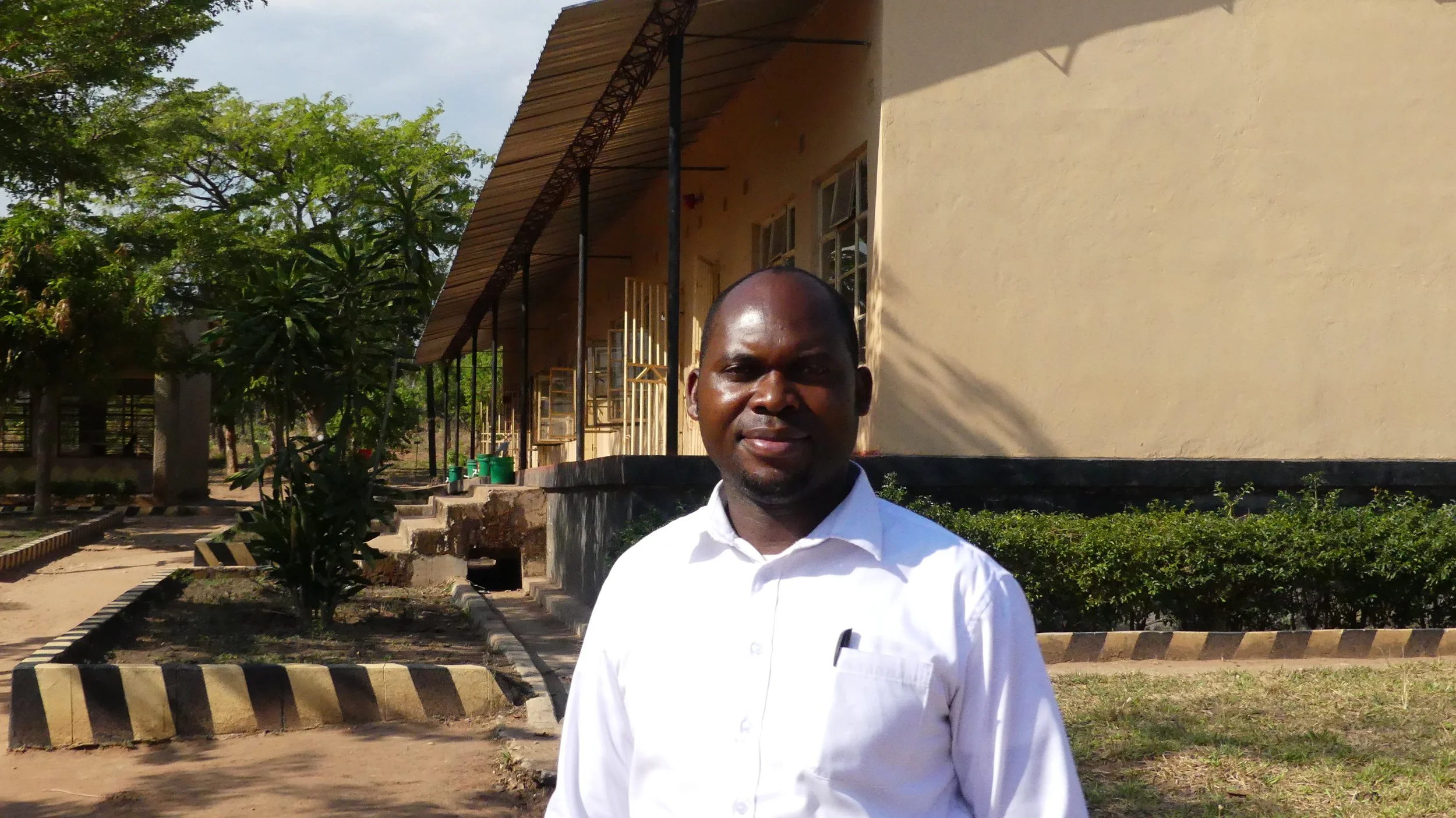
Photo: One Stop Center paralegal Nicolas
It’s hot. We’re thirsty. I walk to a tin-roofed shop and buy the team a round of ice cold Coca-Colas. The condensation begins collecting on the sides of the bottles as soon as I pull them out of the fridge. As we sip, Cecilia tells me it’s a common challenge for survivors to reach the OSC when coming from rural areas. Walking from this village to town would take the entire day; a bicycle ride would still take hours, and taxis are unaffordable for most people. This problem isn’t limited to survivors. While LWOB supports the National Prosecution Authority efforts to improve their prosecution of SGBV cases, the lack of reliable transportation makes it difficult for prosecutors to secure witnesses to attend trials in town and trial dates are often postponed when witnesses don’t show up. The OSC Land Cruiser is a pivotal first step in OSC’s ability to move people around, but it can’t be everywhere at once.
Nicolas’s phone rings. The survivor and her father have made it to a nearby police outpost. We throw the cruiser in gear and drive down the hill on a rocky dirt path. We hear the sound of rocks slipping out from under us. I grip the door, but Allan assures me that the Land Cruiser can handle the steep descent. Sure enough, we make it to the bottom, and pull into the police post. Mercy jumps out and greets the survivor and her father. They have a brief check-in before she welcomes them into the cruiser. We head back into town. I’m surprised how quickly the reunion passes considering how long it took to find them.
We drop the survivor and her father at the One Stop Center, where they are seen by a doctor and nurse; there is also a psycho-social counselor on staff. After their medical needs are met, Nicholas the paralegal explains the legal process and liaises with the police. Typically, the police investigation starts here; after that the case moves to the National Prosecution Authority, who file the relevant charges in court. Allan drives me back to Bakashana’s office. It’s only 3pm, but I feel like I’ve lived a lifetime over the past seven hours.
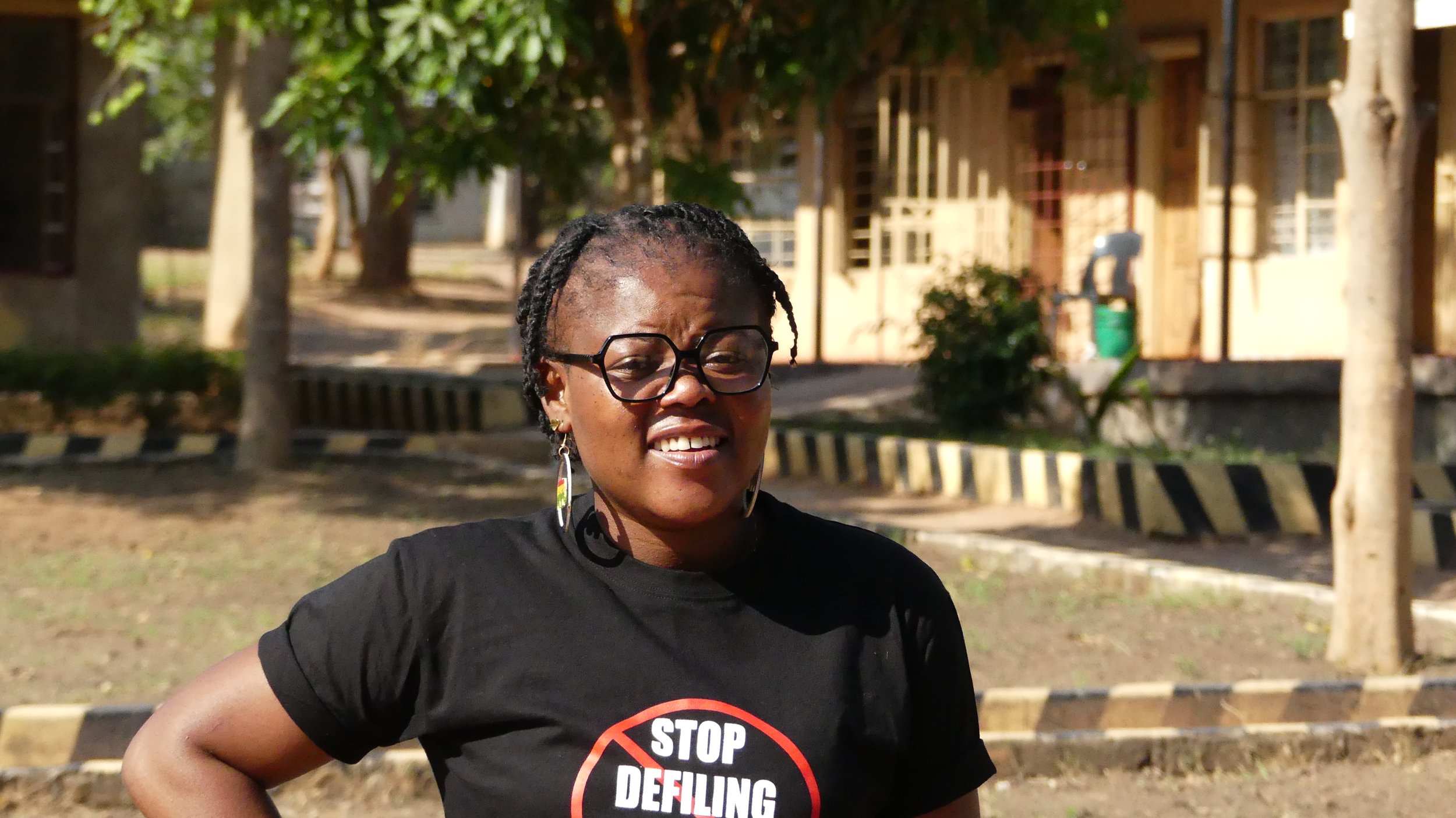
Photo: Bakashana manager and social worker Cecilia
The team is resilient in the face of challenges. Funding for OSCs across Zambia previously came from USAID, but now, OSCs across the region are shuttered. Highly trained and dedicated professionals are out of a job. The team at Bakashana were asked by the community to step in and keep the center running. Their dedication and innovation have meant that the Kasama OSC is the only one in the vast region still operational. This is precisely the kind of gap that our Zambia: Bridges to Justice project was designed to address: urgent, locally-identified needs that fall outside of traditional funding streams but still demand a response.
The Zambia: Bridges to Justice project is supporting interagency cooperation between government and NGO stakeholders to streamline intake processes and promote collaboration. In the coming months, we will also increase community outreach programs to raise awareness of the causes of SGBV, and the rights of Zambians in response to it.
In meetings with justice sector stakeholders, we repeatedly heard that our project fills a critical gap. The question was always whether we could scale the project to all of Northern Zambia, or even other provinces. For Lawyers Without Borders, this is familiar territory. We have the tools and experience to respond to these kinds of community needs with targeted, practical solutions. However, scaling and sustaining this work depends on flexible funding that allows us to act on these requests as they arise. For now, we do what we can, and we are honest with our Zambia partners about the rest.
In many ways, my day was not unique to Zambia. SGBV is a problem that exists around the globe. However, seeing how local SGBV service providers navigate Kasama’s unique challenges — rapid urbanization, a booming population, and transportation issues — makes it feel like I’ve witnessed a town on the precipice of transformation. Lawyers Without Borders is proud to support local institutions like the OSC as they rise to the occasion, and demonstrate through Bridges to Justice what becomes possible when the right support meets community-driven need.